Native Asio Coroutine Baseline
Native Asio TCP coroutine Release local loopback: 1024-byte messages, 16 clients and window 16. Latency is batch RTT.
No Extra Application Computation
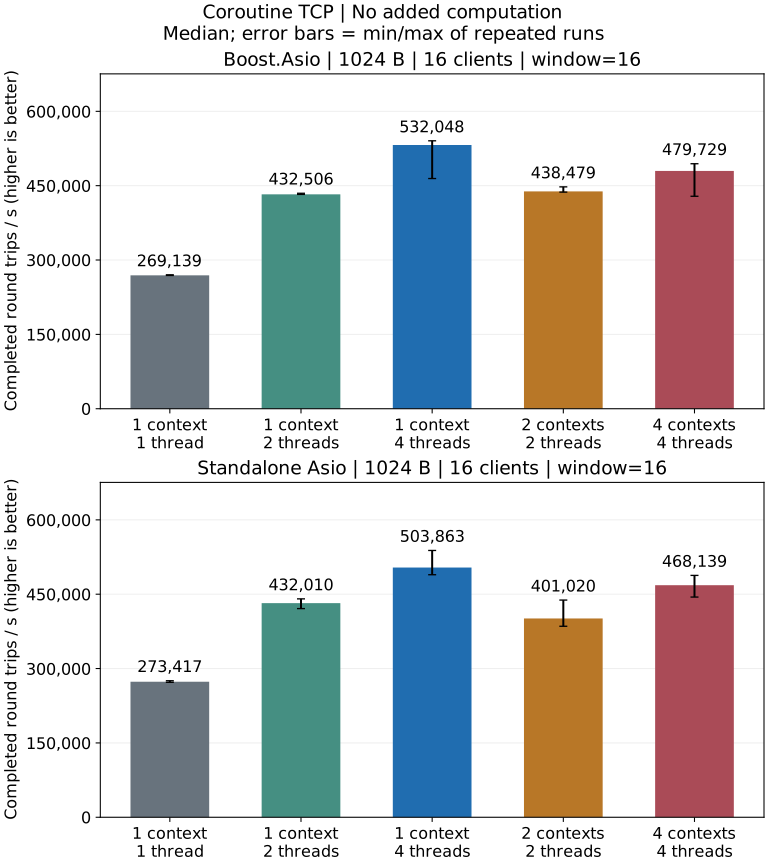
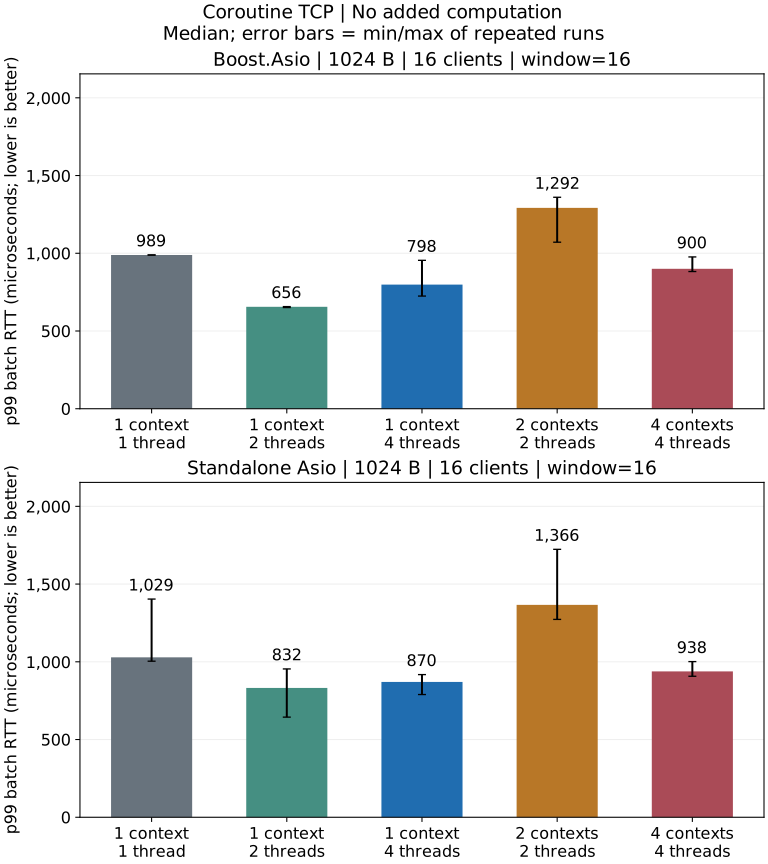
- One context/four threads has the highest throughput median and one context/two threads the lowest batch p99 median for both dependency combinations.
- Standalone’s batch p99 run ranges overlap between one context/two threads and one context/four threads, so these runs do not establish a consistent tail-latency advantage.
10,000 Deterministic Iterations Per Echo
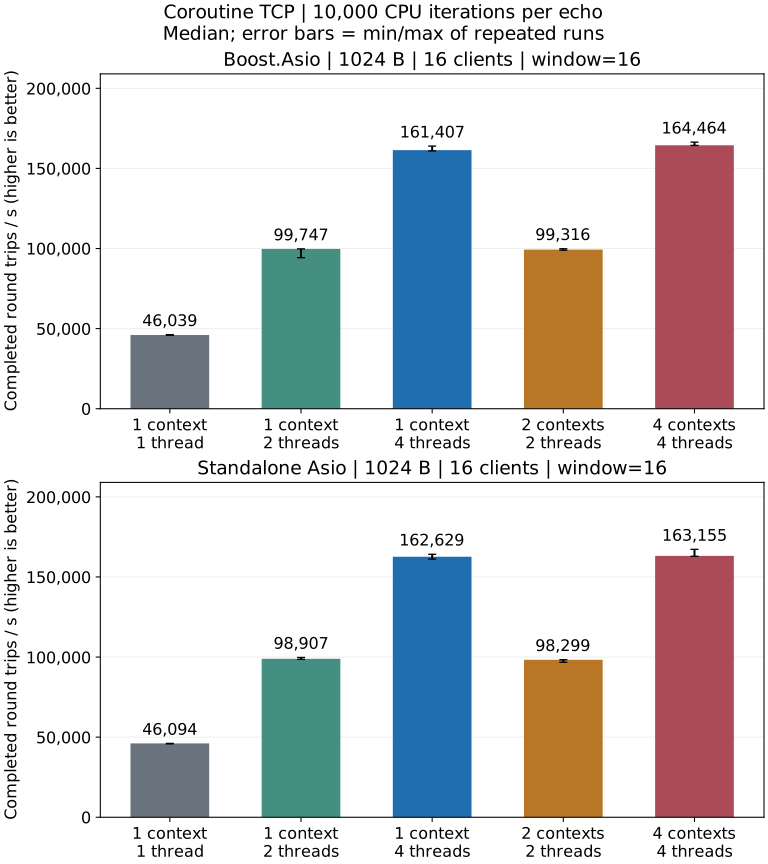
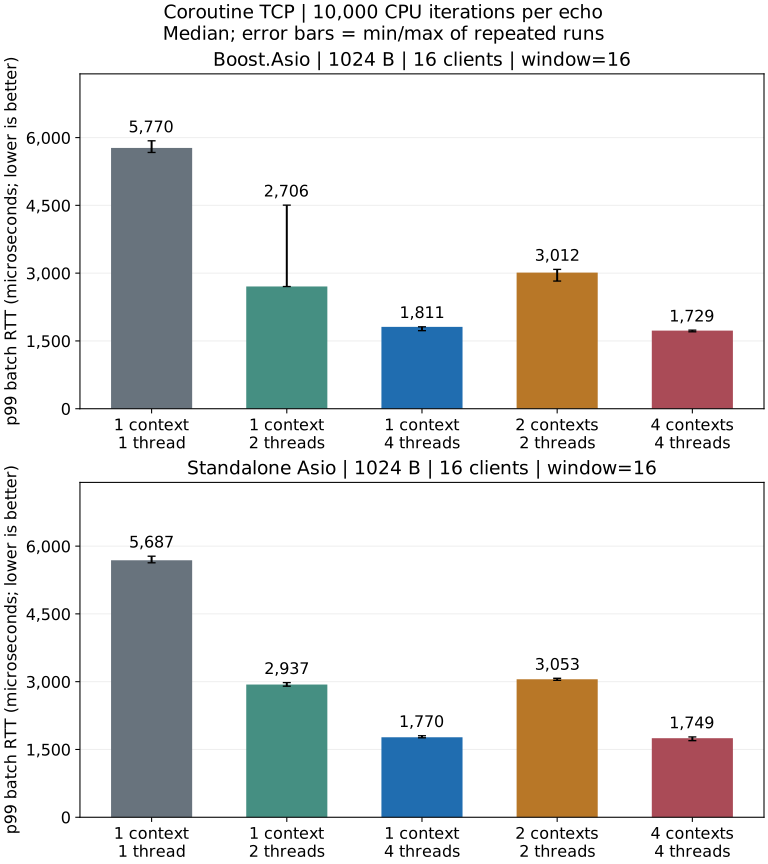
- Four contexts/one thread each has the highest throughput median and lowest batch p99 median for both dependency combinations.
- Batch p99 run ranges overlap between one context/four threads and four contexts/one thread each for both dependency combinations.
Complete coroutine baseline · Payload, batch and execution comparisons
Test environment · Metrics and statistics · TCP callback results
Reproducing the Comparison
The checked-in programs benchmarks/loopback.cpp (arknet callbacks) and
benchmarks/coroutine.cpp (native Asio callbacks/coroutines) each have an
independent main. Build with CMake and run the C++ executable directly:
cmake -S . -B build-perf -DCMAKE_BUILD_TYPE=Release \
  -DARKNET_BUILD_BENCHMARKS=ON -DARKNET_ENABLE_SSL=OFF \
  -DARKNET_USE_BOOST_ASIO=OFF -DARKNET_ASIO_INCLUDE_DIR=/path/to/asio/include
cmake --build build-perf --target arknet_coroutine_benchmark --parallel 3
build-perf/benchmarks/arknet_coroutine_benchmark \
  --execution coroutine --protocol tcp --payload 1024 --clients 16 --window 16 \
  --io-model shared --io-threads 4 --work 0 --warmup 0.25 --seconds 1
This example uses one context/four threads, 1024-byte messages, 16 clients and
window 16, writing JSON to standard output. Replace the Asio include argument
with -DARKNET_USE_BOOST_ASIO=ON for Boost. With Visual Studio, add
--config Release and run the .exe under benchmarks/Release/.
The --io-model values shared and sharded select one context with multiple
threads and one context per thread, respectively. Set --io-threads 1 to test
one context/one thread. --execution callback runs the matched native callback
mode. --work 10000 adds 10,000
deterministic iterations per server echo; 0 adds no application computation.
This is a synthetic load, not a production parser or crypto algorithm. Compare
topologies within the same benchmark program, dependency combination, payload, concurrency and
computation setting. The Asio coroutine program sends and reads fixed-size batches:
with --window above one, its latency is batch RTT. The arknet callback program continuously
replenishes its window and reports individual-message RTT. Their throughput and
latency do not establish a coroutine-versus-callback speedup.
The expanded comparison runs callback and coroutine modes of the same native Asio TCP program. Its server reads a complete batch, performs the configured computation on each message, then writes the full reply. Window 1 measures message RTT; larger windows measure batch RTT. See the matched comparison.
Repeat configurations in fresh C++ processes, or use the maintainer’s shell
matrix in Testing. Only that batch tool needs
jq, GNU timeout and shasum; direct C++ tests and single benchmarks do not.
Raw results and test commands are documented in Testing and Performance. Short loopback measurements cannot predict WAN latency or production capacity.