All 96 configurations and 276 measured runs passed, completing 7,960,439 message round trips. Content, ordering, send completion and drain checks passed, with zero relay errors or queue overflows.
Test Environment
| Item | Recorded Parameters |
|---|---|
| Time (UTC) | 2026-10-13T03:20:31Z / 2026-10-13T04:00:27Z |
| Machine | Mac mini (Mac16,11); Apple M4 Pro; 14 logical CPUs; 48 GiB RAM |
| OS | macOS 27.0.1 (26A434); arm64 |
| Build | Apple clang version 21.0.0 (clang-2100.1.1.101); C++20 Release -O3 -DNDEBUG -std=gnu++20; no sanitizers; CMake 4.3.3 |
| Dependencies | Standalone Asio 1.38.2; Boost 1.90.0; OpenSSL 3.6.4 |
| Endpoint Load | 4 clients; complete-message echo; no added business computation; callback API |
| Main Comparison | 54 cases; 3 rounds per case; 2 s warmup; 3 s measured; 1,024 B; 16 in-flight/client |
| Payload / Window | 36 cases; 64 / 4,096 / 16,384 B; windows 1 / 64; random loss; 1 io_context / 1 thread |
| Sustained Runs | 6 cases; one 120 s measured run per case; 4,096 B; window 16; 1 io_context / 4 threads |
| Repeated Seeds | Main and dimension runs use 42 / 43 / 44; separate streams per route and direction |
| Socket Receive Buffers | Effective endpoint values: 4 MiB |
| ARQ | UDP MTU 1200 B; send / receive windows 128 / 512 segments; update interval 10 ms; congestion control on |
| FEC Groups | Up to 8 data shards; fixed parity 2; adaptive parity limit 4; configured group wait 2 ms |
| FEC Budgets | Per-endpoint retention limit 1 MiB; parity datagram bytes limited to 50% of data datagram bytes |
| Relay Capacity | Per route: 8 MiB / 8192 datagrams |
Source SHA-256: 15cb6ced6425d82086a083fd310f6d75016ac3a1018264856d41b460e4412d85.
Network Conditions and Metrics
| Condition | Injected Loss | One-Way Delay | Duplication / Reordering |
|---|---|---|---|
| No injected loss | 0 | 0 ms | 0 |
| Random loss | 5% per datagram | 10 ms | 1% duplicates; 5% delayed by an extra 15 ms |
| Burst loss | 3 consecutive datagrams per 100, per direction | 10 ms | Same as above |
| Sustained runs | Burst loss plus 2% random loss of remaining datagrams | 10 ms | Same as above |
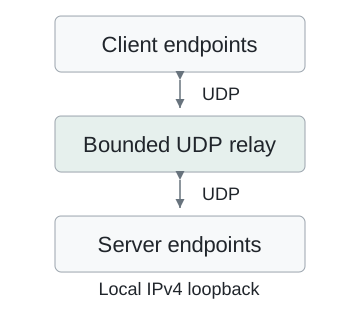
These are network-condition simulations within one process on local IPv4 loopback, not WAN measurements. The relay always adds one io_context and one thread; statistics sampling uses another thread. Chart IO models describe endpoints only.
Server sessions share a UDP socket and its strand. Four io_contexts with one thread each mainly distribute clients and do not establish parallel server sharding.
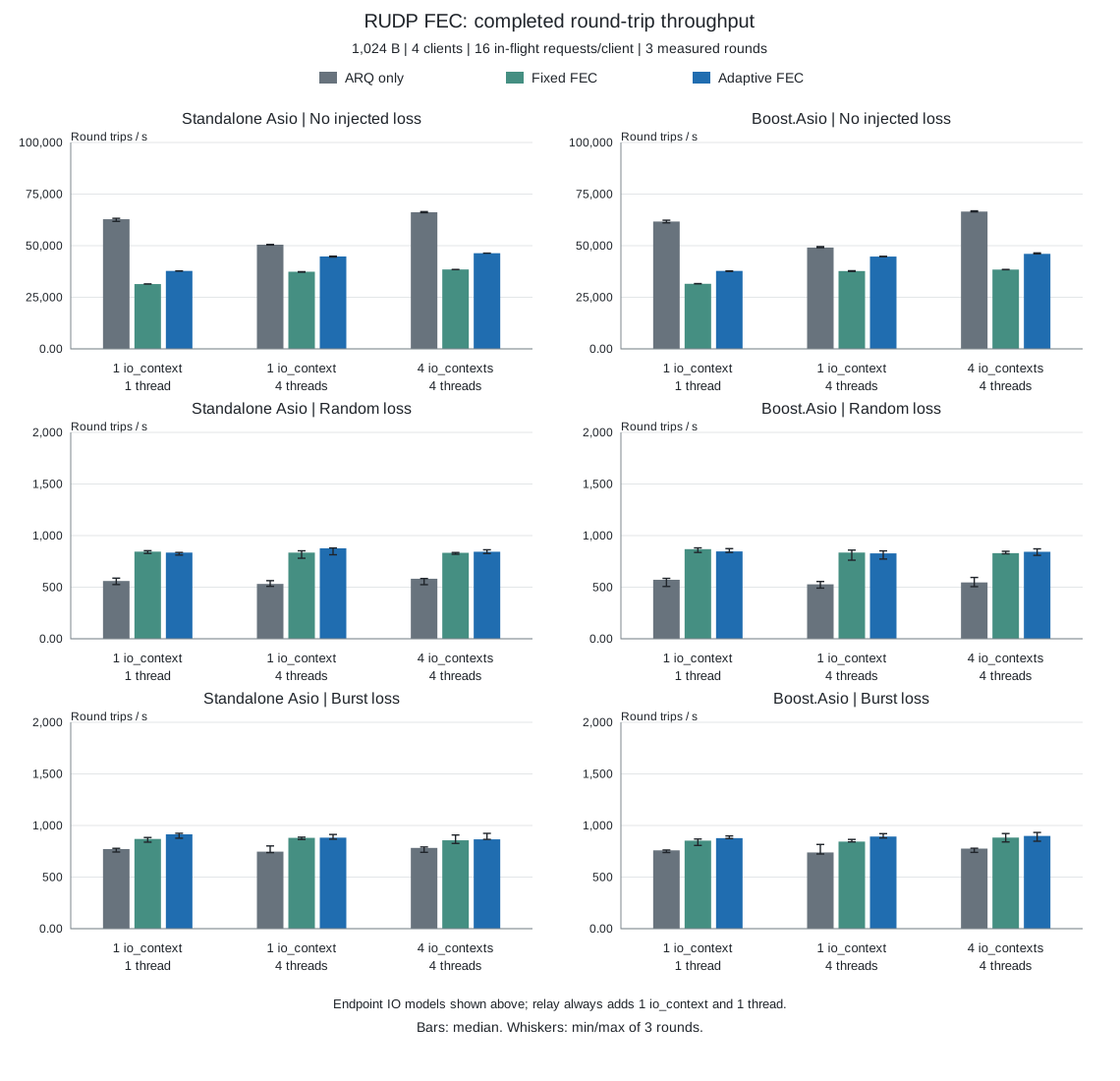
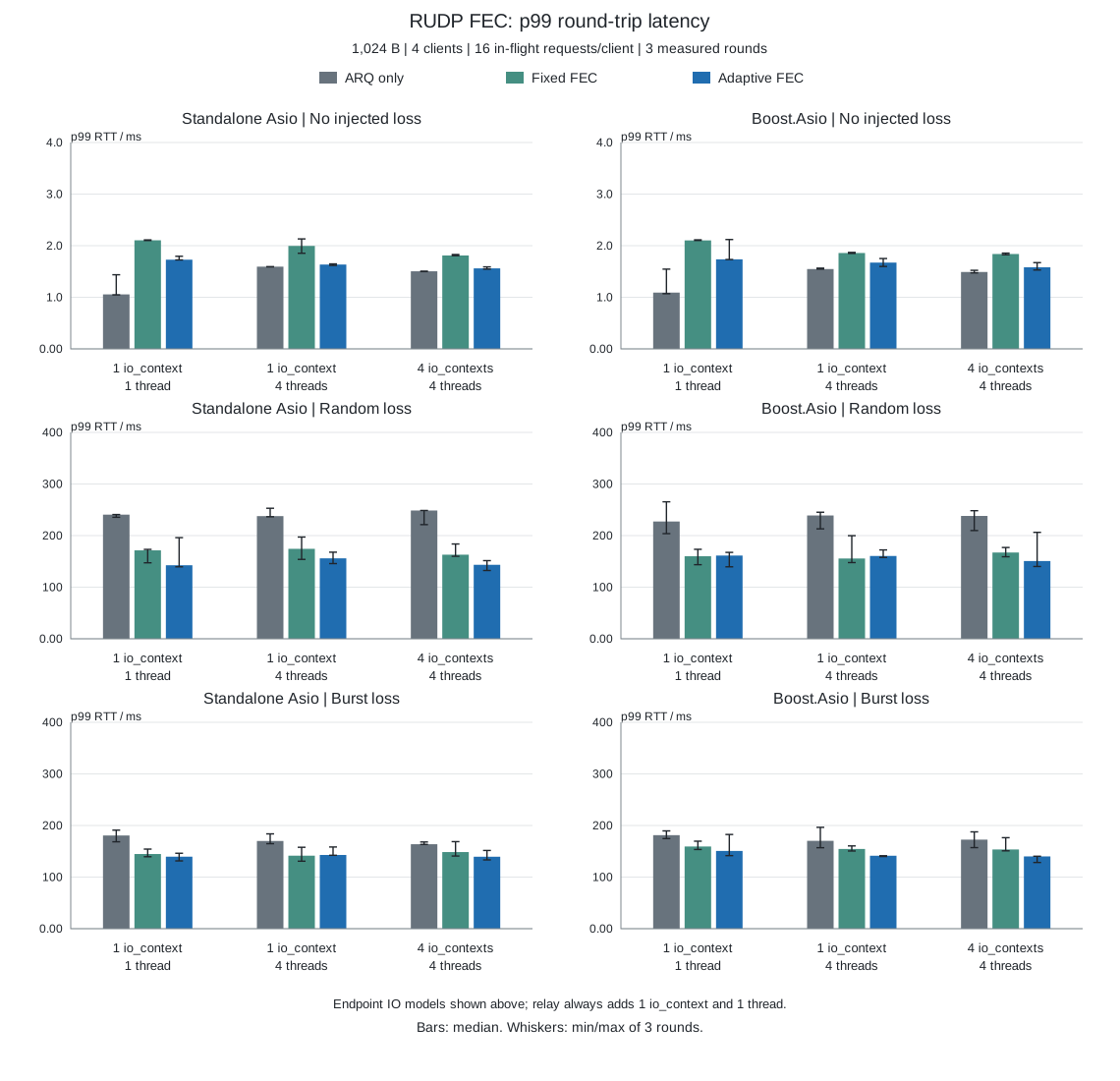
RTT includes simulated delay, congestion control, FEC group wait and ARQ retransmission. Throughput counts completed message round trips and includes in-flight drain time. Bars are medians; whiskers are the actual minimum/maximum of three runs, not confidence intervals.
Throughput and p99 RTT
CPU and Wire Overhead
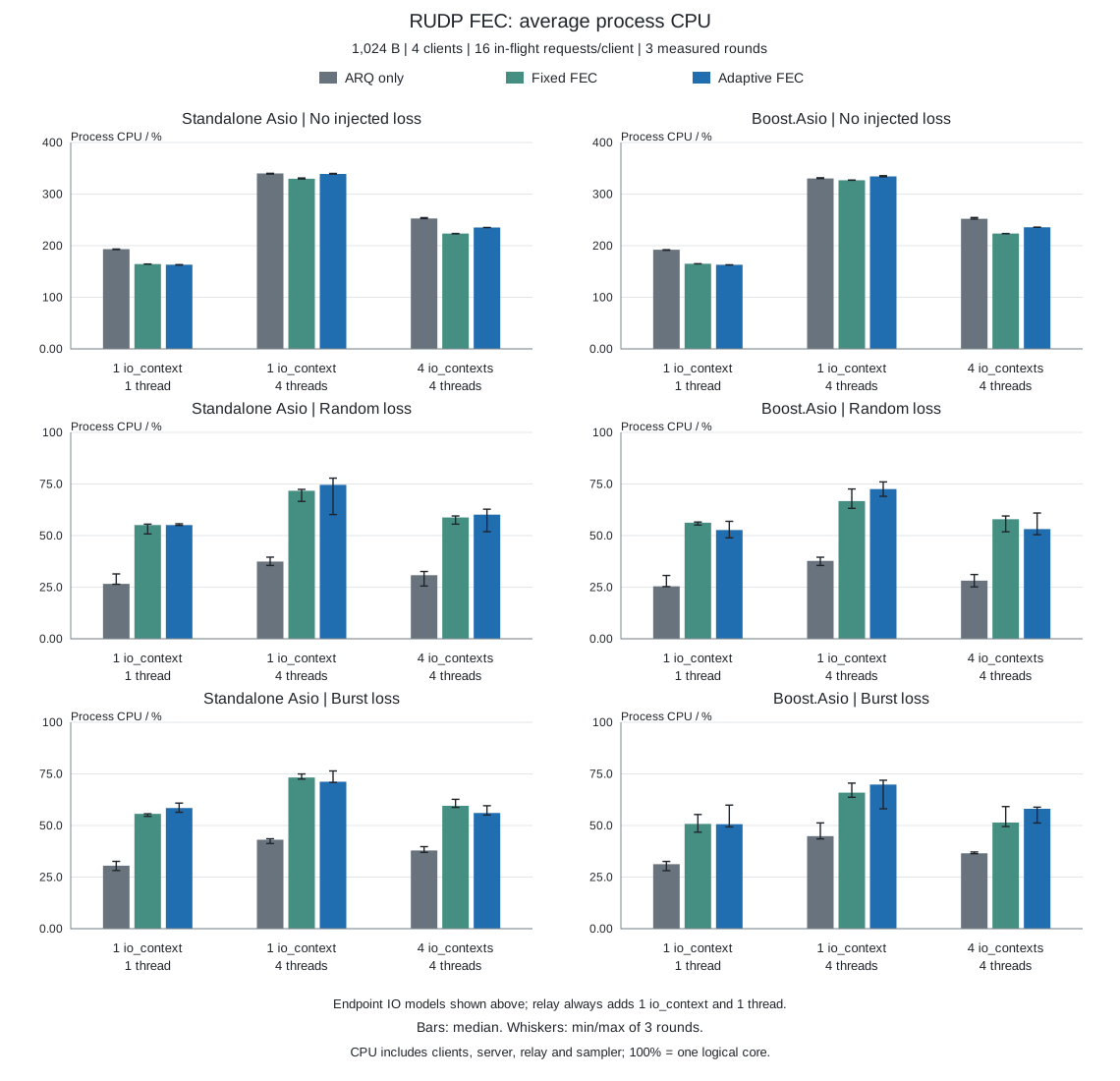
CPU is average process utilization including clients, server, relay and sampling. One logical CPU is 100%; multiple threads can exceed 100%. Machine share is process CPU% / 14; the full summary includes both measures.
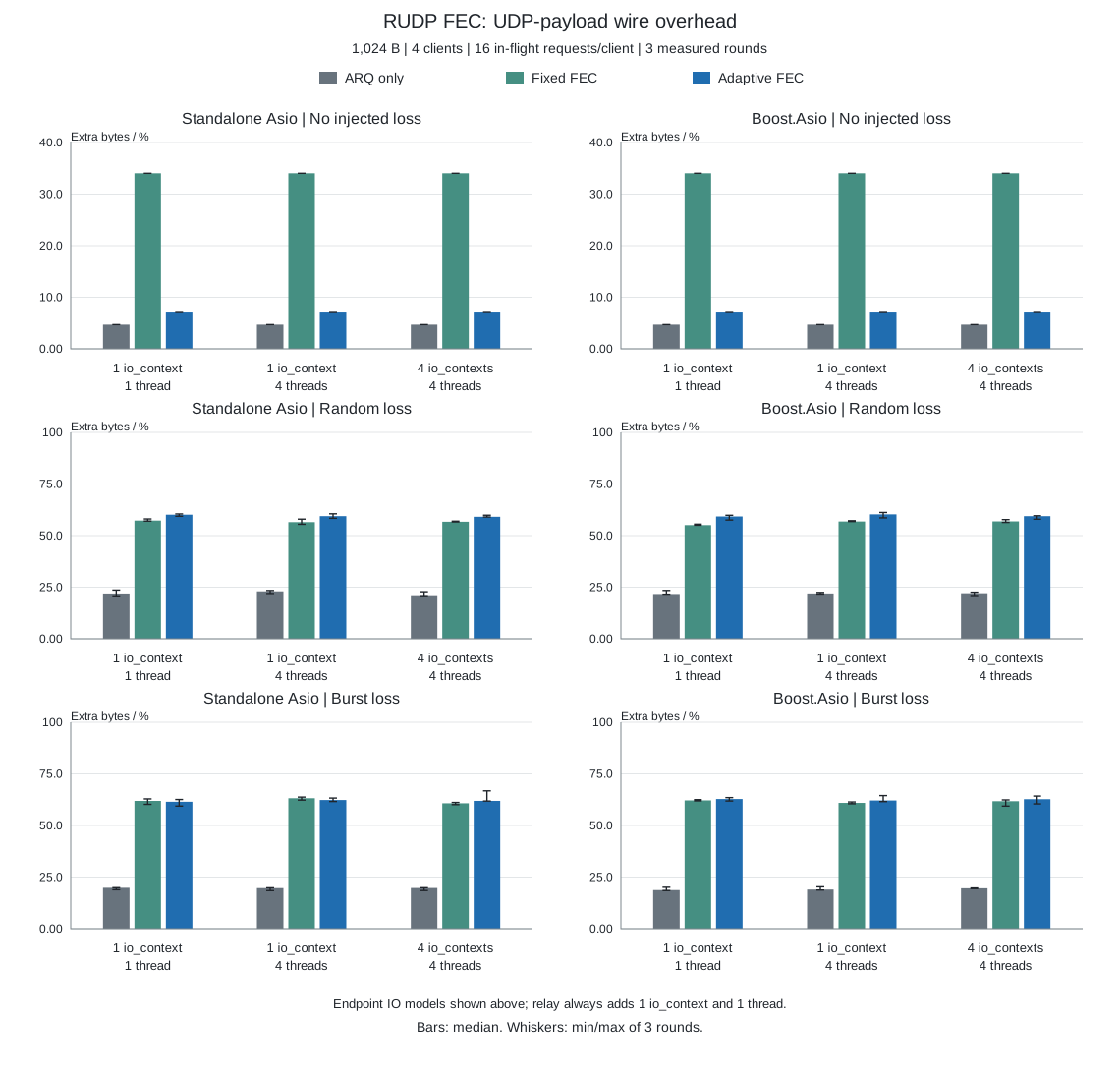
Wire overhead = (endpoint UDP payload bytes sent / bidirectional application bytes − 1) × 100%. It includes ARQ control/retransmission, FEC headers, parity and padding; excludes IP/UDP headers and the relay’s second forwarding hop. It is not the FEC parity ratio.
Recovery, Retransmission and Retained Memory
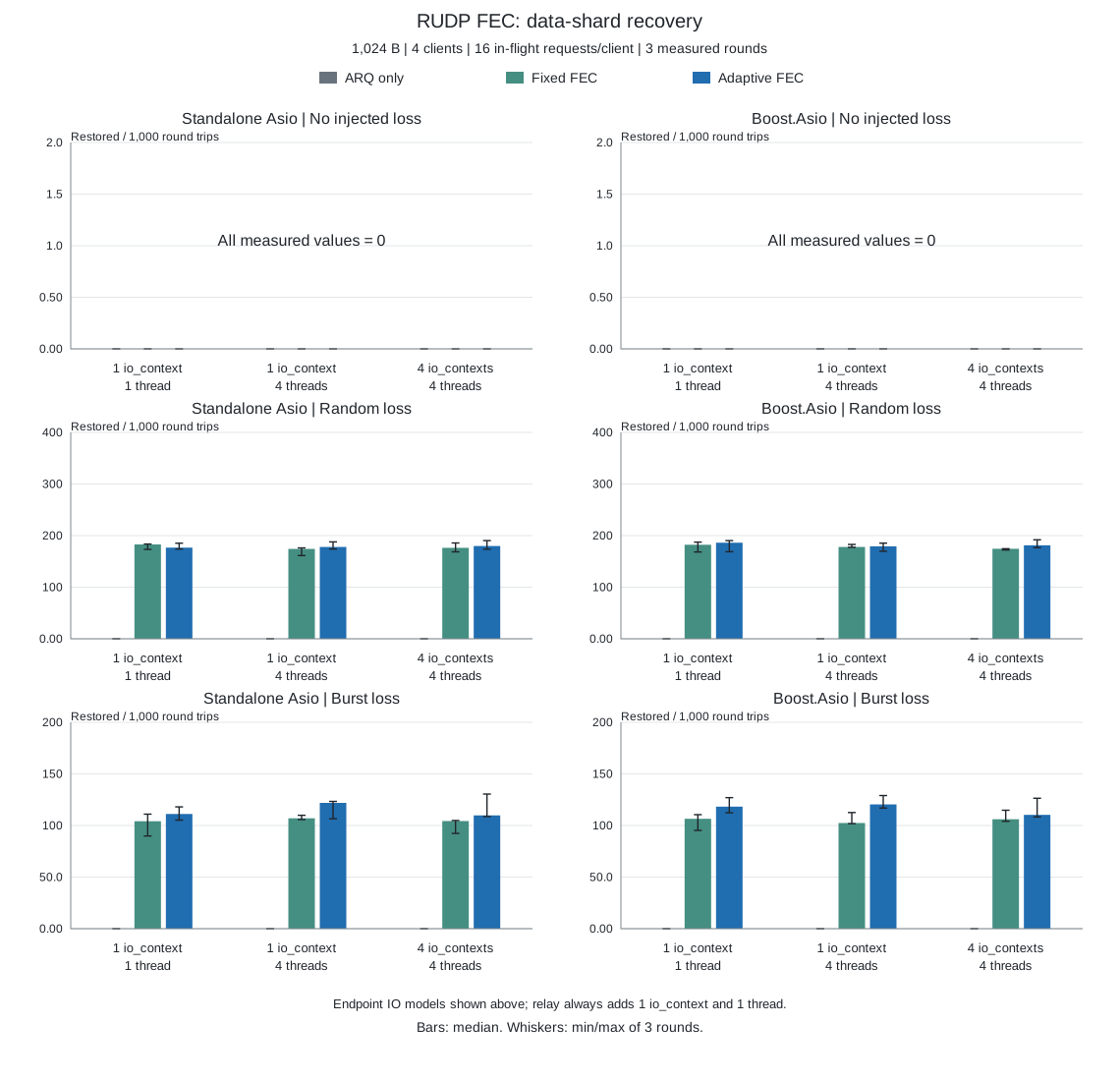
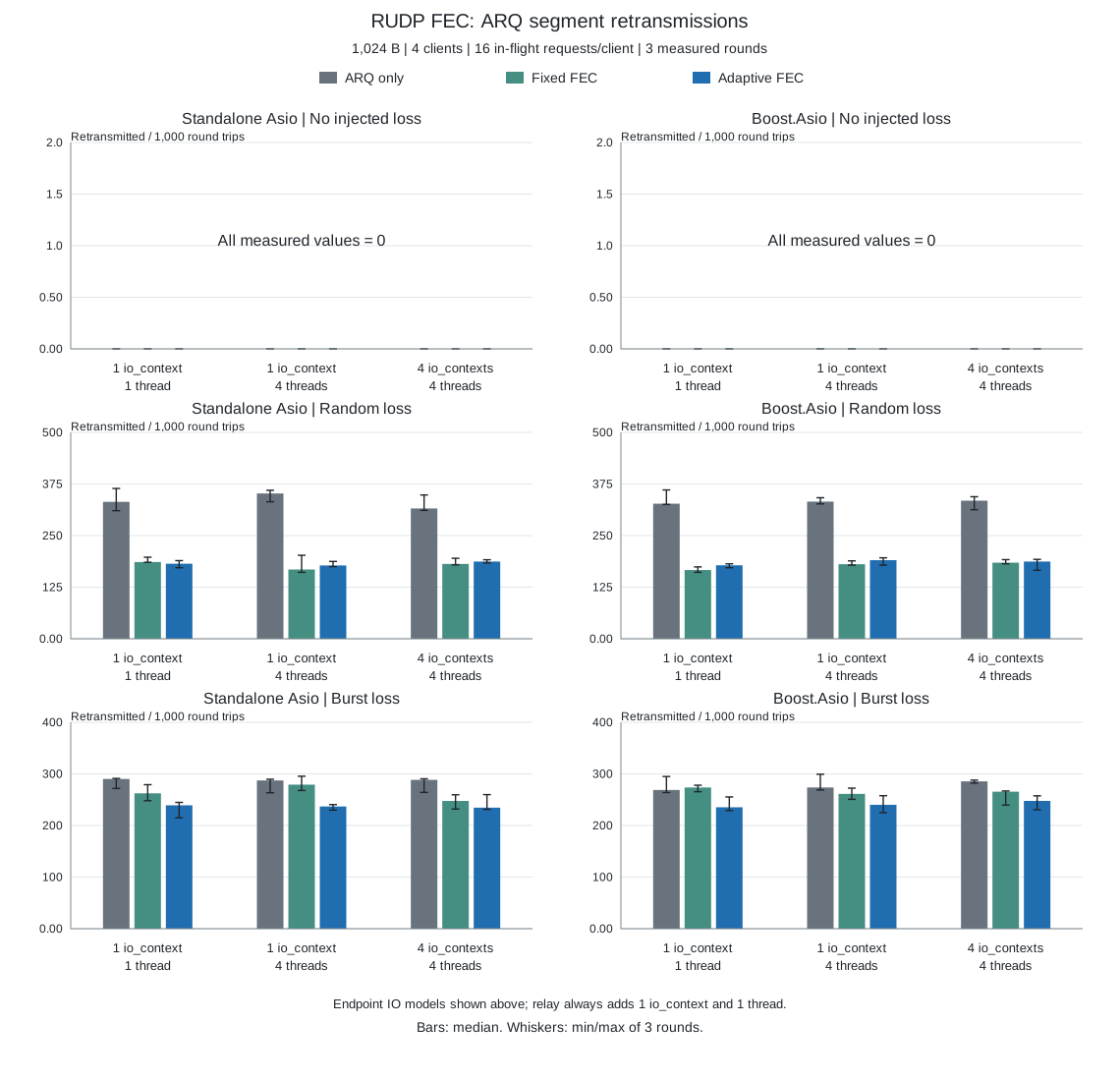
Recovery counts data shards restored by FEC; retransmissions count ARQ segments sent again. Both are normalized per 1,000 application round trips and are not complementary quantities.
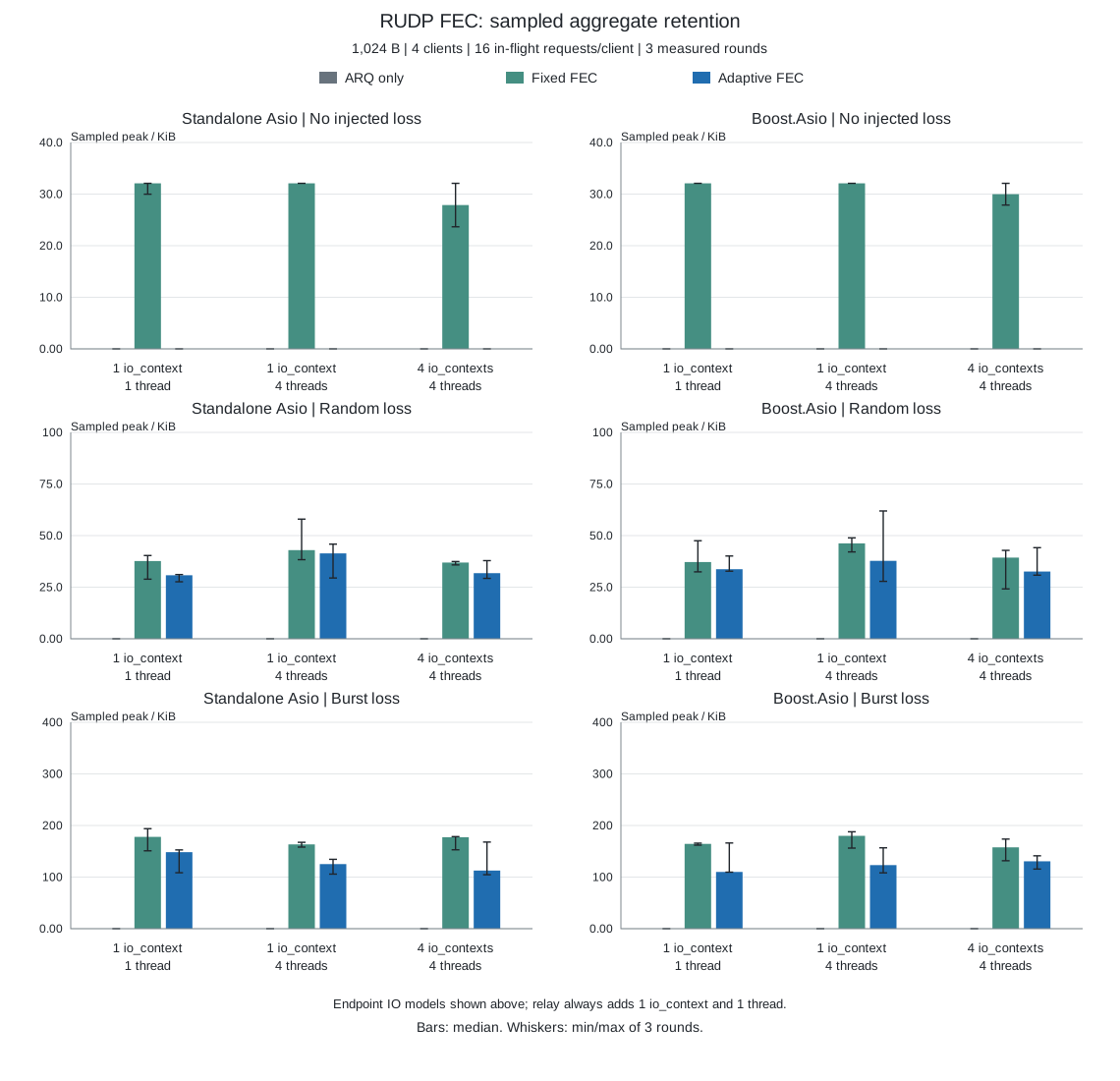
FEC retention sums endpoint statistics sampled every 100 ms and can miss shorter peaks; it excludes some temporary codec storage. Relay values sum independent route peaks that may occur at different times. RSS is the process high-water mark for a case, including warmup and all its rounds, not FEC-only memory.
Resource Values Under Random Loss
1,024 B; window 16; one io_context / one endpoint thread. Sampled peaks are medians across three rounds.
| Dependency / Policy | Restored / 1,000 | Retransmitted / 1,000 | FEC Retained / KiB | Relay Route Peaks Sum / KiB | Process RSS / MiB | Max Observed Parity |
|---|---|---|---|---|---|---|
| Standalone Asio / ARQ only | 0.0 | 331.7 | 0.0 | 50.5 | 6.8 | 0 |
| Standalone Asio / Fixed FEC | 182.8 | 185.9 | 37.7 | 84.3 | 7.1 | 2 |
| Standalone Asio / Adaptive FEC | 176.7 | 181.8 | 30.8 | 83.4 | 7.2 | 3 |
| Boost.Asio / ARQ only | 0.0 | 327.3 | 0.0 | 52.4 | 7.0 | 0 |
| Boost.Asio / Fixed FEC | 182.2 | 166.5 | 37.2 | 87.1 | 7.3 | 2 |
| Boost.Asio / Adaptive FEC | 186.2 | 178.0 | 33.7 | 93.8 | 7.3 | 3 |
Payload Size and In-Flight Requests
Random-loss condition; one io_context / one endpoint thread. Cells show round trips/s / p99 RTT in milliseconds, both three-run medians. Full JSON contains CPU, wire overhead and resource counters.
Standalone Asio
| Message / B | In-Flight per Client | ARQ Only | Fixed FEC | Adaptive FEC |
|---|---|---|---|---|
| 64 | 1 | 139 / 80.8 | 116 / 91.4 | 140 / 79.6 |
| 64 | 64 | 450 / 876.3 | 421 / 941.3 | 419 / 920.6 |
| 4,096 | 1 | 74 / 139.4 | 114 / 93.5 | 113 / 88.5 |
| 4,096 | 64 | 146 / 2,096.2 | 223 / 1,432.5 | 234 / 1,285.4 |
| 16,384 | 1 | 20 / 344.9 | 29 / 240.2 | 31 / 228.5 |
| 16,384 | 64 | 42 / 6,239.0 | 64 / 4,019.4 | 67 / 4,034.0 |
Boost.Asio
| Message / B | In-Flight per Client | ARQ Only | Fixed FEC | Adaptive FEC |
|---|---|---|---|---|
| 64 | 1 | 138 / 81.9 | 117 / 96.8 | 142 / 78.4 |
| 64 | 64 | 435 / 853.7 | 446 / 895.7 | 406 / 998.8 |
| 4,096 | 1 | 75 / 141.5 | 119 / 93.5 | 115 / 95.5 |
| 4,096 | 64 | 142 / 2,108.6 | 228 / 1,342.6 | 232 / 1,247.0 |
| 16,384 | 1 | 21 / 383.5 | 30 / 235.1 | 31 / 264.8 |
| 16,384 | 64 | 41 / 6,212.4 | 63 / 4,157.4 | 66 / 4,102.8 |
Application messages are fragmented to the protocol MTU. 16 KiB denotes a message, not one UDP datagram. FEC subtracts 26 B from the 1,200 B UDP payload ceiling, leaving 1,174 B for an ARQ datagram.
120-Second Sustained Runs
Each case has one measured run, so no repeated-run whiskers are shown. All message checks passed. Memory uses the definitions above; peaks alone do not establish the absence of long-term leaks.
| Dependency / Policy | Message Round Trips | Round Trips/s | p99 / ms | CPU / % | Wire Overhead / % | FEC Sampled Peak / KiB |
|---|---|---|---|---|---|---|
| Standalone Asio / ARQ only | 20,734 | 172 | 599.6 | 48.6 | 24.2 | 0.0 |
| Standalone Asio / Fixed FEC | 27,622 | 229 | 448.3 | 82.1 | 66.2 | 232.6 |
| Standalone Asio / Adaptive FEC | 29,058 | 241 | 453.6 | 84.9 | 70.3 | 166.8 |
| Boost.Asio / ARQ only | 20,870 | 173 | 606.4 | 50.3 | 23.9 | 0.0 |
| Boost.Asio / Fixed FEC | 27,666 | 230 | 453.8 | 80.2 | 66.4 | 242.6 |
| Boost.Asio / Adaptive FEC | 29,136 | 242 | 445.3 | 84.7 | 70.0 | 148.5 |
Results and Policy Selection
The following compares main-matrix cases with one io_context / one endpoint thread, keeping IO models separate from policy ranking.
| Dependency | Network Condition | Highest Round-Trip Throughput | Lowest p99 RTT |
|---|---|---|---|
| Standalone Asio | No injected loss | ARQ only 62,827 round trips/s | ARQ only 1.1 ms |
| Standalone Asio | Random loss | Fixed FEC 844 round trips/s | Adaptive FEC 142.5 ms |
| Standalone Asio | Burst loss | Adaptive FEC 914 round trips/s | Adaptive FEC 139.5 ms |
| Boost.Asio | No injected loss | ARQ only 61,705 round trips/s | ARQ only 1.1 ms |
| Boost.Asio | Random loss | Fixed FEC 869 round trips/s | Fixed FEC 160.0 ms |
| Boost.Asio | Burst loss | Adaptive FEC 878 round trips/s | Adaptive FEC 150.7 ms |
The ranges below span the two dependency configurations’ three-run medians:
- No injected loss: ARQ only reached 61,705 - 62,827 round trips/s, with p99 1.06 - 1.09 ms. Both throughput and p99 favored ARQ-only over the measured FEC policies on both dependency configurations.
- Random loss: FEC throughput was 835 - 869 round trips/s versus 560 - 572 for ARQ only. Process CPU increased from 25.4 - 26.6% to 52.7 - 56.2%, and wire-byte overhead from 21.7 - 21.9% to 55.1 - 60.1%.
- Random loss, 64 B and one in-flight request per client: fixed FEC reached 116 - 117 round trips/s, below ARQ-only’s 138 - 139. Small-message, low-concurrency workloads need separate evaluation.
These results do not establish a universal winner. Select against p99, CPU, wire-byte and memory budgets together. Fixed FEC parity still depends on group density and byte budgets; adaptive FEC needs enough samples and adjustment time. Full values retain realized loss, observed parity and policy changes.
This report has no cross-host, real-WAN, IPv6 stress or RUDP coroutine measurements. The public RUDP API currently uses callbacks; coroutine support is TODO. ARQ-only and both FEC policies use the same relay topology; compare them under the same network conditions and endpoint IO model.
Reproduction and Full Data
cmake -S . -B build-perf -DCMAKE_BUILD_TYPE=Release -DARKNET_BUILD_BENCHMARKS=ON \
  -DARKNET_USE_BOOST_ASIO=OFF -DARKNET_ASIO_INCLUDE_DIR=/path/to/asio/include
cmake --build build-perf --target arknet_rudp_benchmark
build-perf/benchmarks/arknet_rudp_benchmark --payload 1024 --clients 4 --window 16 \
  --io-model shared --io-threads 1 --fec adaptive --profile random \
  --loss-percent 5 --delay-ms 10 --duplicate-percent 1 --reorder-percent 5 \
  --seconds 3 --warmup 2 --rounds 3 --seed 42
Configure Boost in a separate build directory with -DARKNET_USE_BOOST_ASIO=ON. Individual cases run directly as C++ executables; the maintainer batch entry is bash benchmarks/run_rudp_fec.sh BUILD_DIR OUTPUT_DIR, with no Python or Ruby dependency. Raw data retains every actual command, exit code and stderr file.
The optional offline report tool needs Node only and does not launch network tests:
node benchmarks/report_rudp_fec.mjs --self-check
node benchmarks/report_rudp_fec.mjs \
  --results benchmarks/results/macmini-m4pro-20261013/rudp-fec --output docs/performance